Location

A Bee Swarm or Hive on Your Property Needs Attention

Finding a swarm of bees clustered on a fence post or tree branch is an unsettling experience. Finding an established hive inside your wall cavity, roof void, or garden shed is a more serious problem altogether. Both situations are ones most people want resolved quickly, and both require a very different approach to treat properly.

Bees are valuable no one disputes that. They’re critical pollinators and genuinely important to the environment. But a hive established inside a building, or a swarm that’s settled near an entry point to your home, creates real risks that don’t go away on their own. Established hives grow. Honeycomb expands inside wall cavities, attracts other pests, and can cause structural damage and significant moisture problems if it’s left in place after the bees are gone. Swarms, while often temporary, can establish a permanent hive within days if the conditions suit them.

At Melbourne 24×7 Pest Control, we handle bee situations properly from start to finish. That means identifying exactly what you’re dealing with, recommending the right course of action whether that’s relocation or treatment and making sure the job is done completely, not just partially. We’re available 24 hours a day, 7 days a week, because a swarm near a school entrance or a hive inside a wall doesn’t wait for a Monday morning appointment.

Bee Species We Commonly Deal With in Melbourne

Not everything that buzzes is the same, and how we handle a bee situation depends heavily on the species involved.

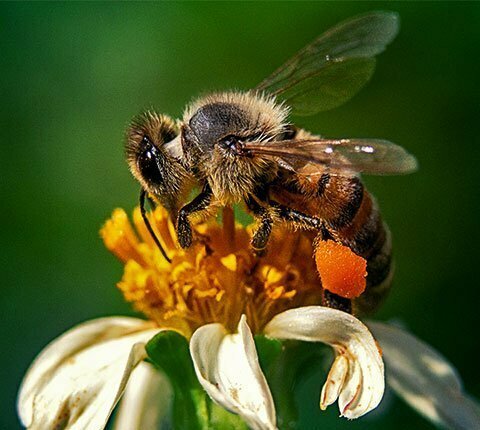
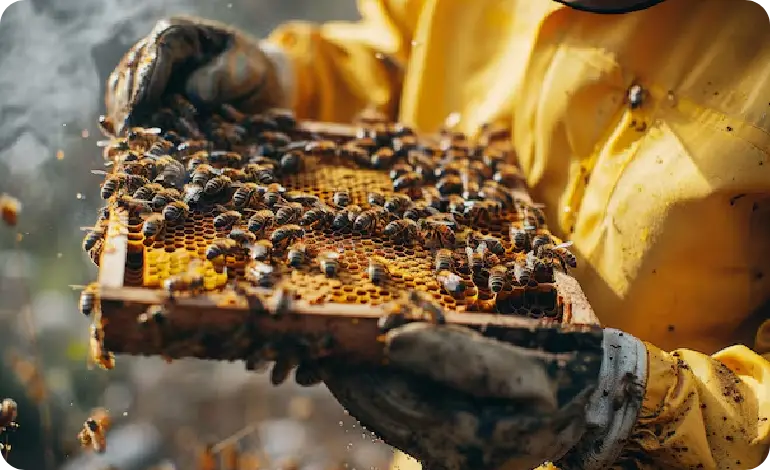
European Honey Bees are responsible for the overwhelming majority of bee jobs we attend in Melbourne. They form large, permanent colonies that can contain tens of thousands of bees at peak season. They swarm in spring and early summer when the colony outgrows its original hive, sending a new queen and a large portion of the worker population out to find a new home. That swarm is what you typically see hanging in a cluster from a tree or fence. If they find a suitable cavity inside a wall, a roof void, a water meter box, or a tree hollow they’ll move in and start building comb within days.

Native Stingless Bees are small, dark, and completely harmless. They nest in small colonies inside tree hollows and timber, and their colonies are protected under Victorian law. We do not treat native stingless bees. If you have them on your property and they’re not causing a problem, leave them alone they’re beneficial and pose zero risk.

Mortar Bees also called mason or resin bees are solitary bees that nest in the mortar between brickwork, in timber weatherboards, and in soft render. They’re not aggressive and don’t form colonies, but they can cause cosmetic damage to mortar joints over time. Treatment is straightforward and is usually only warranted when numbers are significant.

Feral Honey Bee Colonies are established European honey bee populations living in tree hollows, building voids, and wall cavities often undetected for years. These are the most challenging jobs because the comb infrastructure can be extensive by the time anyone notices them, and removal requires more than simply treating the bees themselves.

Why a Swarm and an Established Hive Are Completely Different Problems

This is something most people aren’t aware of, and it matters a lot when it comes to what happens next.

A fresh swarm โ€” the cluster of bees you see hanging somewhere is actually at its most docile. The bees have no hive to defend, no comb, no queen laying eggs yet. They’re in transit. In many cases, a fresh swarm will move on by itself within 24 to 48 hours if it doesn’t find a suitable cavity. The risk goes up significantly once they’ve moved into a structure and started building comb, because now they have something worth protecting.

An established hive is a different job entirely. The colony is settled, the comb can stretch metres inside a wall cavity, and simply treating the bees without addressing the comb leaves you with a decaying honeycomb that drips through ceilings, ferments, and draws in ants, cockroaches, and other pests for months afterwards. A proper hive removal involves treating the colony, removing the comb where accessible, and sealing all entry points so the void isn’t recolonised.

How We Handle Bee Jobs

Every job starts with an assessment. We identify the species, determine whether it’s a swarm or an established colony, locate all entry points, and figure out how long the bees have been there. From that, we give you a clear recommendation and explain exactly what the treatment will involve.

Where relocation by a registered beekeeper is a viable option, we’ll tell you. Where the hive is concealed inside a building structure and relocation isn’t practical, we treat the colony professionally using registered products, remove accessible comb, and seal entry and exit points to prevent reoccupation.

For businesses, schools, childcare centres, and aged care facilities, we understand the urgency. A bee situation near people particularly children or anyone with a known allergy is a genuine emergency and we treat it that way.

Covering All of Melbourne, Around the Clock

We service the full Melbourne metropolitan area inner suburbs, outer suburbs, the Mornington Peninsula, and surrounding areas. Residential homes, rentals, commercial properties, schools, hospitality venues, and industrial sites.

Same-day and emergency callouts are available every day of the year.

Don’t Let a Swarm Become a Permanent Problem

๐Ÿ“ž 0450 510 555

Melbourne 24×7 Pest Control. Licensed technicians. Proper removal. Guaranteed results.

FAQ - Bee Control Melbourne

Completely. A swarm is a colony in transit bees clustered together temporarily while scouts look for a new home. They’re at their calmest during this stage and may move on within a day or two without intervention. An established hive means they’ve moved in, started building comb, and have a queen laying eggs. That requires a much more involved job treating the colony, dealing with the comb, and sealing the entry points. Calling us early, while it’s still a swarm, almost always results in a simpler and less expensive job.

This is one of the most important questions people forget to ask. If honeycomb is left inside a wall cavity after the bees are gone, it becomes a serious secondary problem. It ferments, produces a strong smell, attracts ants, cockroaches, and other pests, and can seep through plaster and ceilings as it breaks down in warmer weather. Where the hive is accessible, we remove the comb as part of the job. Where it’s inside an enclosed wall cavity, we advise on the best course of action in some cases that means opening the wall, in others it means sealing the cavity and allowing it to dry out over time with appropriate treatment.

Yes, and this is one of the most common frustrations people have after a poorly done bee job. Bees leave behind pheromone traces chemical signals that essentially mark a location as a good nesting site. If the entry points aren’t properly sealed after treatment, a new swarm can find those traces and move into the same void within the same season. Sealing all access points after removal is not optional it’s the part of the job that determines whether the problem stays gone.

It depends on the species. Native stingless bees are protected under Victorian legislation and must not be harmed. European honey bees, despite their name, are an introduced species in Australia and are not protected in the same way they can be treated when they present a genuine risk to people or property. Mortar bees and other native solitary species occupy a middle ground we don’t recommend treating them unless numbers are causing real structural issues, and even then we use the least invasive approach available.

Technically, a neighbour’s bee hive on their own property is their business there’s no blanket law in Victoria requiring private landowners to remove established bee colonies. That said, if the hive poses a genuine safety risk and your neighbour is unresponsive, your local council may be able to assist depending on the circumstances, particularly if it’s on a boundary or there’s a documented risk. We’d recommend having a conversation with your neighbour first and referring them to us most people are willing to act once they understand the risks involved.

Call 0450 510 555 immediately. Anaphylaxis from a bee sting can progress very rapidly within minutes in severe cases. Symptoms to watch for include throat tightening, difficulty breathing, swelling of the face or tongue, sudden drop in blood pressure, and loss of consciousness. If the person has an EpiPen, use it straight away and still call 0450 510 555 regardless. Do not wait to see if symptoms settle. Once the emergency is dealt with, call us to get the hive or swarm removed before anyone else is stung.

It can be. Several native bee species in Australia are ground-nesters they excavate small burrow systems in dry, sandy, or compacted soil. These are almost always solitary native bees and they’re not aggressive. You’d need to virtually stand on one to get stung. They’re actually beneficial for your garden and don’t need treatment in most cases. If you’re seeing a significant volume of bees entering and exiting a ground hole, it’s worth getting us to take a look and identify what you’re dealing with before any action is taken.

Very urgent call us immediately on 0450 510 555. A swarm near a high foot traffic area where children are present is a priority job. Even a typically docile swarm can react defensively if a child accidentally disturbs it. We attend school and childcare emergencies as a matter of priority and can advise on whether the area needs to be cordoned off while we’re on our way. Do not attempt to move or disperse the swarm yourself.

Bees inside a wall produce a consistent, low hum that tends to be concentrated in one area. It’s often most audible in the morning as activity picks up. You may also notice bees entering and exiting through a small gap usually around a weep hole, a gap in weatherboards, around a pipe penetration, or under a window frame. European wasps in walls can sound similar but the entry and exit activity looks different wasps are faster movers and the flight pattern near the entry point tends to be more erratic. If you’re not sure, give us a call and describe what you’re hearing and seeing. We can usually give you a good indication over the phone.

Call 0450 510 555 any time we’re available 24 hours a day, 7 days a week including public holidays. If it’s urgent a swarm near people, a known allergy in the household, or bees inside a building tell us when you call and we’ll prioritise getting someone to you as quickly as possible.

services

Expert solutions for every pest problem

Ants Control

Professional ant extermination services to eliminate colonies and prevent reinfestation.

Cockroach Control

Professional cockroach extermination services for homes and commercial spaces.

Spider Control

Safe and effective spider control treatments for homes and businesses.

Bee Control

Professional bee hive removal and relocation services.

Wasps Control

Safe and professional wasp nest removal services for homes and businesses.

Rodent Control

Complete rodent control solutions to eliminate rats and mice from your property.

Bed Bug Control

Professional bed bug treatment services to eliminate infestations quickly.

Termite Control

Comprehensive termite inspection and treatment services to protect your property.

Fly Control

Professional fly control treatments for homes, restaurants and commercial spaces.

Moth Control

Effective moth control solutions to protect clothing and stored food items.

Rat Removal

Professional rat removal services to eliminate infestations safely.

Mites Control

Advanced mite treatment solutions to protect your home and family.

Bird Control

Professional bird control solutions to prevent nesting and property damage.

Possum Removal

Humane possum removal and relocation services for residential and commercial properties.

Silverfish Control

Professional silverfish control treatments to protect your home and stored items.

Areas We Serve

Providing reliable and effective pest control services across multiple locations